Happy New year Sale Buy Now Get 50% Discount on all types of books.

Sale!

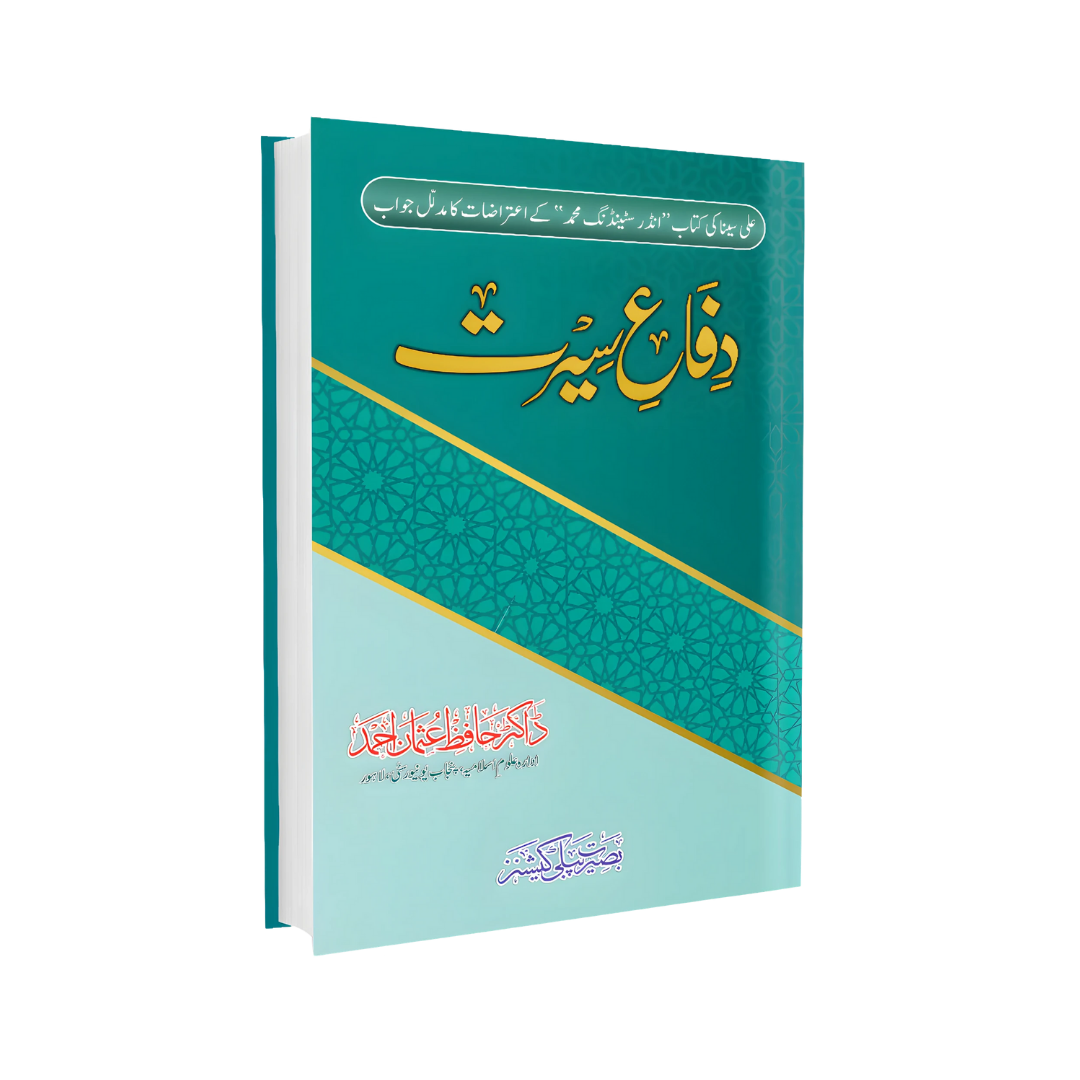
Difa e Seerat (Answer to Ali Sina’s Understanding Muhammad)
850 Original price was: 850. 595Current price is: 595.
- In Stock
The book titled “Difa-e-Seerat” (Defense of the Prophet’s Biography) is a comprehensive rebuttal to the objections raised in the book “Understanding Muhammad” by the atheist Ali Sina. In this context, thirteen objections have been addressed in detail. These include accusations such as the alleged negligence of Lady Amina in nursing the Prophet ﷺ, claims of a lack of love between Lady Amina and the Prophet ﷺ, accusations of deceit in the marriage of Lady Khadijah with the Prophet ﷺ, objections to the Prophet ﷺ’s meditative retreat in the Cave of Hira, allegations of neglecting family rights, criticism of his engagement in shepherding, misconceptions regarding the martyrdom of Yasir and Sumayya, distortions about the conversion of Abu Bakr and Umar, etc.
Details :
- Book Name
- : Difa e Seerat (Answer to Ali Sina’s Understanding Muhammad)
- Author
- : Dr. Hafiz Usman Ahmad
- Pages
- : 224
- Publishing Year
- : 2024
- Book Quality
-
:
68 Gram White Paper With Hard Binding
Costumer Reviews
Share This Items :
- Description
- Info
The book titled "Difa-e-Seerat" (Defense of the Prophet’s Biography) is a comprehensive rebuttal to the objections raised in the book "Understanding Muhammad" by the atheist Ali Sina. In this context, thirteen objections have been addressed in detail. These include accusations such as the alleged negligence of Lady Amina in nursing the Prophet ﷺ, claims of a lack of love between Lady Amina and the Prophet ﷺ, accusations of deceit in the marriage of Lady Khadijah with the Prophet ﷺ, objections to the Prophet ﷺ’s meditative retreat in the Cave of Hira, allegations of neglecting family rights, criticism of his engagement in shepherding, misconceptions regarding the martyrdom of Yasir and Sumayya, distortions about the conversion of Abu Bakr and Umar, questioning the number of converts during the Meccan period, discussions of prior claimants to prophethood among the Arabs, allegations of hypocrisy concerning the killing order of Abdullah bin Abi Sarh, baseless claims about the Prophet ﷺ suffering from respiratory illness, accusations of obsession with the number three, and allegations regarding eating and drinking while fasting.
Ali Sina’s atheistic bias is further evident in his dismay over Michael Hart ranking Muhammad ﷺ at the top of his book The 100: A Ranking of the Most Influential Persons in History. His prejudice is so blatant that he attempts to downplay the suffering of Muslims during the Meccan period by stating that it involved only minor conflicts and dismissing the boycott of Shab Abi Talib as mere inconvenience. However, he paradoxically accepts the account of Umar ibn al-Khattab striking his sister Fatimah bint al-Khattab, including it in his book to criticize a Companion, despite it contradicting his broader narrative.
Similarly, some old orientalist arguments have been recycled with new packaging, such as the baseless claim that the Prophet ﷺ suffered from epilepsy (Allah forbid!). This accusation persists despite the following facts:
1. No fabricated historical narrative mentions any signs of this illness in the Prophet ﷺ.
2. None of the staunch enemies, whether polytheists, Jews, or Christians, ever used this claim against him during his lifetime.
3. From childhood to his final moments, no physician or soothsayer ever identified any symptoms of epilepsy in the Prophet ﷺ.
Despite these clear facts and the scholarly refutations from Muslim experts, these detractors remain unmoved. Their absurdity reaches such an extent that they equate the physical effects of receiving revelation, such as sweating in cold weather or feeling physical weight, to epileptic symptoms. This foolishness does not merit a serious response.
For example, a Companion of the Prophet ﷺ reported that when the Prophet ﷺ rested his blessed head on his lap, the descent of revelation began, causing such a weight that the Companion felt as if his thigh would break. Similarly, when the Prophet ﷺ was on his camel, Qaswa, during the descent of revelation, the animal could not bear the weight and would sit down. If the heaviness of revelation were due to epilepsy, one might ask these critics: does this “epileptic condition” transfer to others? Those who witnessed these events firsthand never doubted the divine nature of the experience, yet modern psychology, with its closed eyes, pretends to know better.
Difa-e-Seerat spans 224 pages and is authored by Dr. Hafiz Usman Ahmad, a distinguished scholar and professor at Punjab University, Lahore.
- Book Name
- : Difa e Seerat (Answer to Ali Sina’s Understanding Muhammad)
- Author
- : Dr. Hafiz Usman Ahmad
- Pages
- : 224
- Publishing Year
- : 2024
- Book Quality
-
:
68 Gram White Paper With Hard Binding